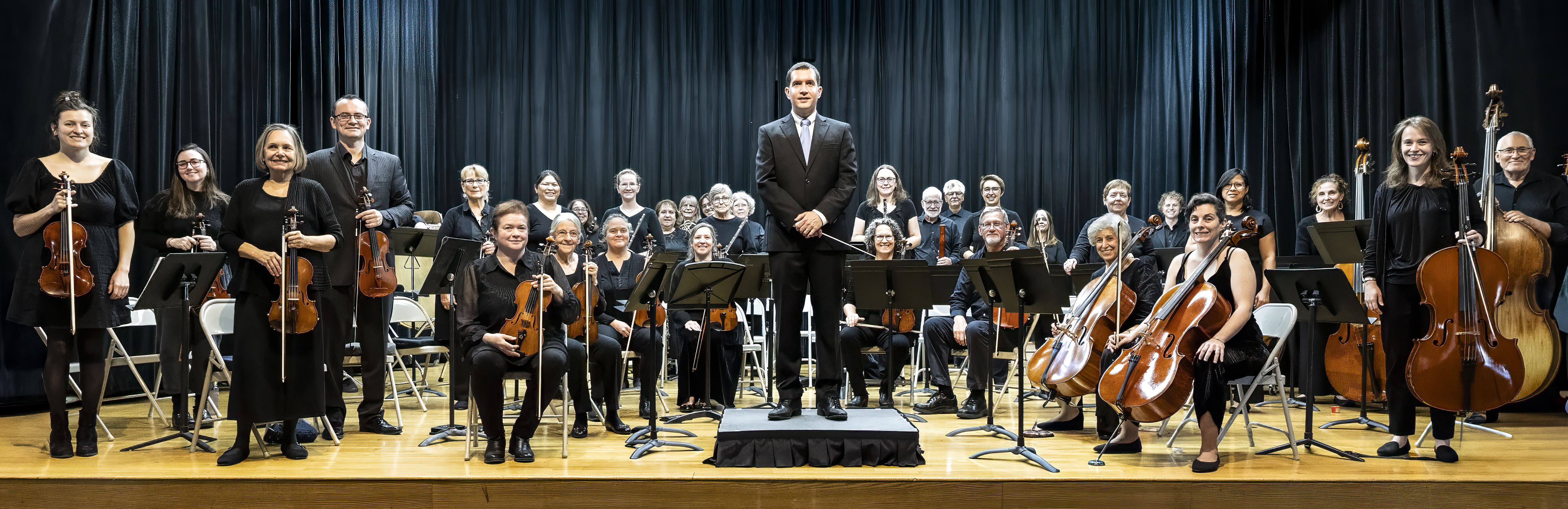
The Falmouth Chamber Players Orchestra believes that classical music is for everyone, and that people of all ages can appreciate the many joys of the genre. Under the direction of Thomas Kociela, the FCPO will present its October concerts, “Once Upon a Symphony—Adventures in Sound,” twice, once for general audiences and a second time to specifically appeal to children and families. Adults are encouraged to come to either or both concerts.
Both concerts will be held at the Morse Pond School Auditorium, 323 Jones Road, in Falmouth. The traditional concert will be on Saturday evening, October 24, at 7 PM, and the family concert will be Sunday, October 25, at 3 PM.
The program is essentially the same for both concerts. It includes excerpts from Englebert Humberdinck’s Suite from Hansel and Gretel, Jacques Offenbach’s Overture to Orpheus in the Underworld, and Alexander Borodin’s Symphony No. 1 in E minor.
“For the family concert, we’ll provide slightly shorter versions of Hansel and Gretel and Overture to Orpheus, with introductions to the instrument families from the stage,” said Kociela. “We’ll also have activity packets available in the lobby before the show and a chance to meet some of the musicians at intermission. The second half of the concert will feature the Borodin symphony, which is just over 30 minutes long.”
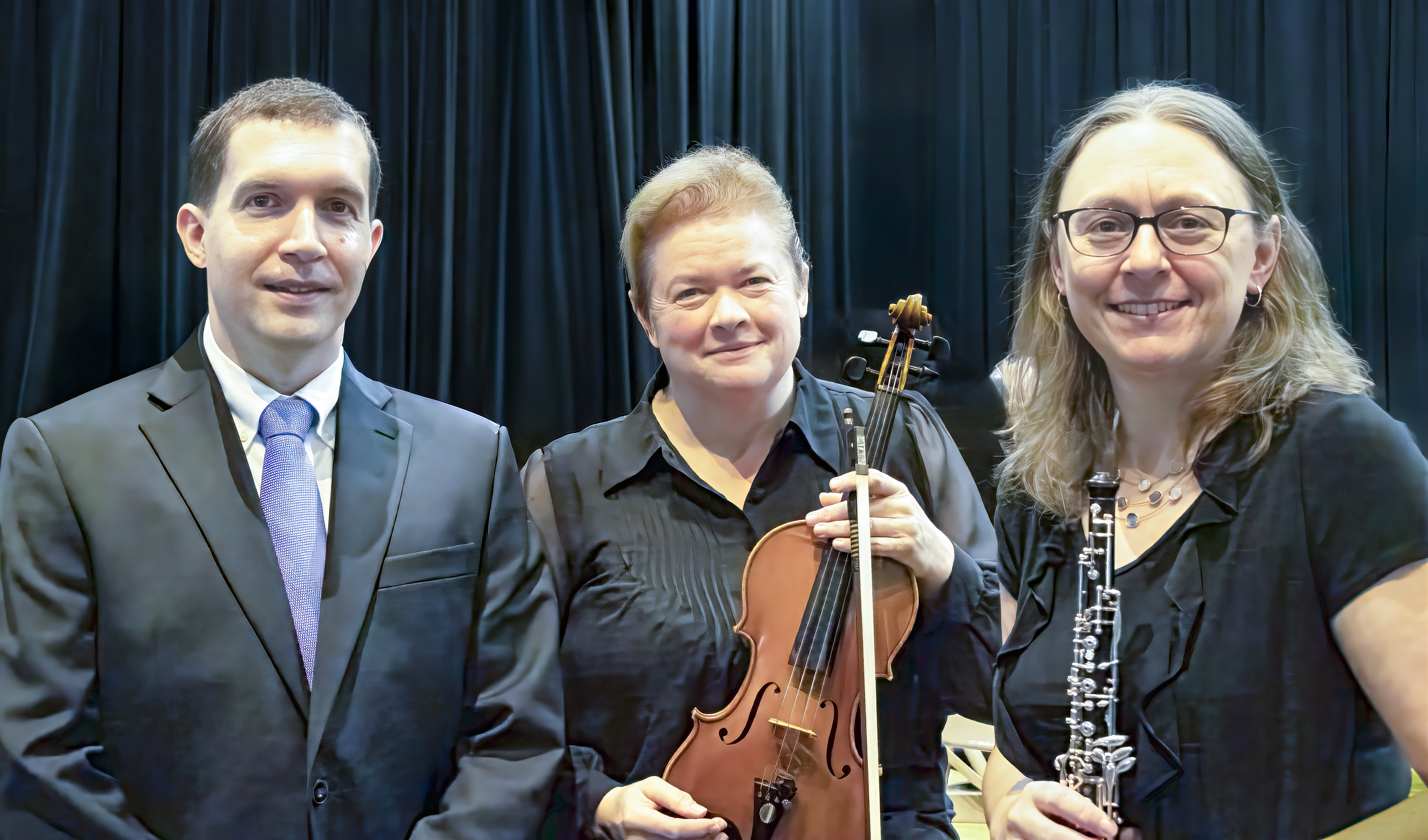
“Offenbach’s Overture to Orpheus in the Underworld is an exhilarating piece of music which shows off the orchestra and many of our principal players, including clarinetist Kathy DiPasqua-Egan and concertmaster Gigi Turgeon,” said Kociela. “This music depicts the ultimate non-stop party destination for the residents of Mt. Olympus!”
Orpheus in the Underworld is an irreverent and witty comic opera parodying the tragic Greek myth of Orpheus and Euridice, upon which Christoph Willibald Gluck’s opera Orfeo ed Euridice (1762) was based. In Offenbach’s tale, Orpheus is a mediocre music teacher, and he and Euridice are unhappily married. When Euridice flies to the Underworld with her lover Pluto, Orpheus is relieved, but forced, by Public Opinion to try to retrieve her. Orpheus uses his musical skills to save his wife, but, in the end, loses her again when he looks back at her as they are leaving: it is a happy ending for them both.
Orpheus in the Underworld premiered in 1858 with only a prelude as an introduction. The Overture was created in 1860 by Austrian musician Carl Binder, who compiled it using selections from the opera. The Overture is best known for its wildly energetic “Galop infernal.” The tune was later adopted by Parisian cabarets to accompany the can-can dance and has been known as the can-can ever since.
When his sister, Adelheid Wette, first asked Humperdinck to write some music for her Christmas Hansel and Gretel puppet show, he was not enthusiastic. But, after several revisions, he transformed his musical sketches and songs into a complete “fairy tale opera” with libretto by Wette. Richard Strauss conducted the premiere in December 1893 and praised it as a masterpiece, admiring Humperdinck’s use of folk melodies and the polyphonic richness of the orchestra.
Humperdinck and Wette rewrote elements of Hansel and Gretel to make it less frightening for children. The parents are kinder and several forest friends help them along their journey. The orchestra will perform several excerpts from the opera: Strawberry Picking in the Forest, Witch’s Ride, Sandman’s Song, Evening Prayer, and Fourteen Angels Guard the Children.
“The Evening Prayer melody is one of the most captivating ever written,” said Kociela. Lost in the woods as night approaches, the frightened children are calmed by the Sandman, who sprinkles magic dust into their eyes. The children sing their evening prayer to each other, secure that they will be kept safe by their guardian angels.
Humperdinck and Wette rewrote elements of Hansel and Gretel to make it less frightening for children. The parents are kinder and several forest friends help them along their journey. The orchestra will perform several excerpts from the opera: Strawberry Picking in the Forest, Witch’s Ride, Sandman’s Song, Evening Prayer, and Fourteen Angels Guard the Children.
Following an intermission, the orchestra will perform Borodin’s Symphony No. 1. Part of “The Five,” a group of Russian nationalist composers, Borodin’s melodies reflect the character of his country’s folk melodies. As a child, he learned to play flute, cello, and piano and began composing when he was 30. His primary occupation, however, was as a chemistry professor and researcher; he also advocated for women’s medical education. It is said that when he was writing Symphony No. 1, he would pause a complex chemistry experiment to rush to the piano to work out a musical thought and then hurry back to his scientific work.
Borodin wrote the symphony between 1862 and 1867. It was published for piano four hands in 1875 and for orchestra in 1882.
“Borodin’s first movement begins solemn and serious, then launches into relentless forward motion, hinting at beautiful folk melodies,” said Kociela. “The second movement was a major hit at the premiere, with restless energy and folk music, which feels authentic but is original to Borodin.
“In the Andante (third) movement Borodin channels the culture of his Georgian father and presents his original folk music evoking the eastern frontiers of Russia at the time (1862),” he continued.
“The Andante has a beautiful main melody,” said Melanie Hayn, president of the orchestra, “which first is presented by the celli. It’s a treat for me as an oboist to get to bring out my English horn and play the melody myself with variations later in the movement.”
“The fourth movement is blazing, making rapid and aggressive jumps between sounds which the classical masters before him never touched,” said Kociela. “Borodin was essential in establishing a uniquely Russian style of classical music. We are pleased to share this rarely performed symphony with our audiences.”
In addition to the two concerts on October 24 and 25, the FCPO is performing an abridged version of the concert on October 21 for all third and fourth graders in the Falmouth Public Schools. The program will show how the orchestra creates beautiful music through teamwork and leadership. This performance was funded by the Arts Foundation of Cape Cod.
“This is a special series of concerts for the orchestra,” said Hayn. “I’m delighted that we can present these three spirited and engaging pieces in performances for three different audiences. There’s something for everyone in this show, and we’re looking forward to sharing it.”
The concerts are free to the public. Donations are gratefully welcomed.
For more information, visit falmouthchamberplayers.org.
The FCPO is funded in part by the Arts Foundation of Cape Cod, the Falmouth Cultural Council, the Mass Cultural Council, the Cape Cod Foundation, the Cape Cod Melody Tent, and the Woods Hole Foundation.

