This event has been canceled due to anticipated rain and high winds.
The Falmouth ArtMarket takes place on Tuesday, August 8, from noon to 6 PM, with music by Denya LeVine, an opportunity to meet author Don Wilding, over 25 creative artists, and ice cream from Sea Scoops. The ArtMarket continues every Tuesday throughout the summer at Falmouth Marine Park, 180 Scranton Avenue.
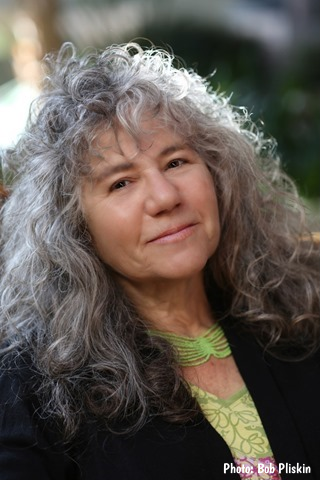
Singer/musician Denya LeVine will perform from 3 to 5 PM. Bringing a joyful energy to every concert, LeVine is a well-known performer of ethnic music. Starting out on classical violin, she learned a variety of instruments and a wealth of styles working at the Fillmore East Rock Theater and traveling the world, absorbing, and sharing, vocal music in the British Isles and Europe. She has lived in England, Afghanistan, India, and elsewhere in Europe and Asia.
In recent years she has visited Borneo, Costa Rica, Morocco, and Singapore. She frequently visits Ireland and Cape Breton Island, immersing herself in local music traditions, and returning with fresh inspiration.
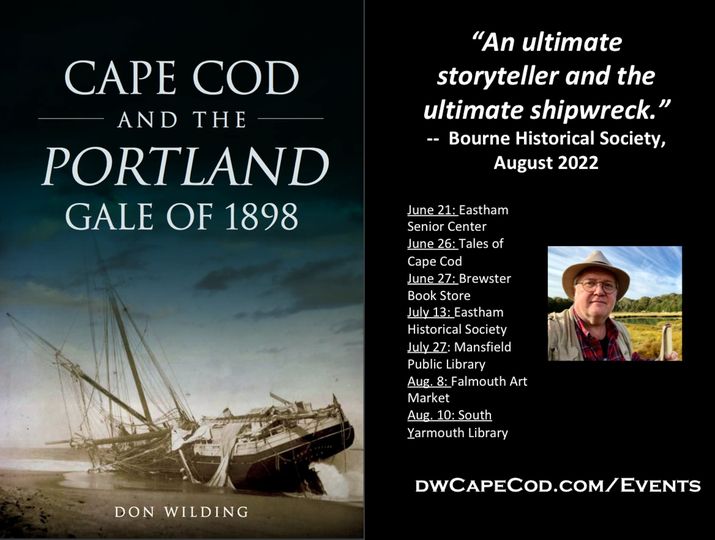
The featured author is Don Wilding, author of Cape Cod and the Portland Gale of 1898. The steamer Portland set out from Boston on November 26, 1898, with a killer storm of historic proportions approaching. By the following night, the ship had sunk, claiming nearly two hundred lives. On the Cape, victims of the disaster washed ashore, ships piled up in harbors, high tides swept away railroad tracks, and the landscape was changed forever.
Wilding writes about what became known as “The Portland Gale” and the heroic deeds of the U.S. Life-Saving Service and the Cape’s citizenry.
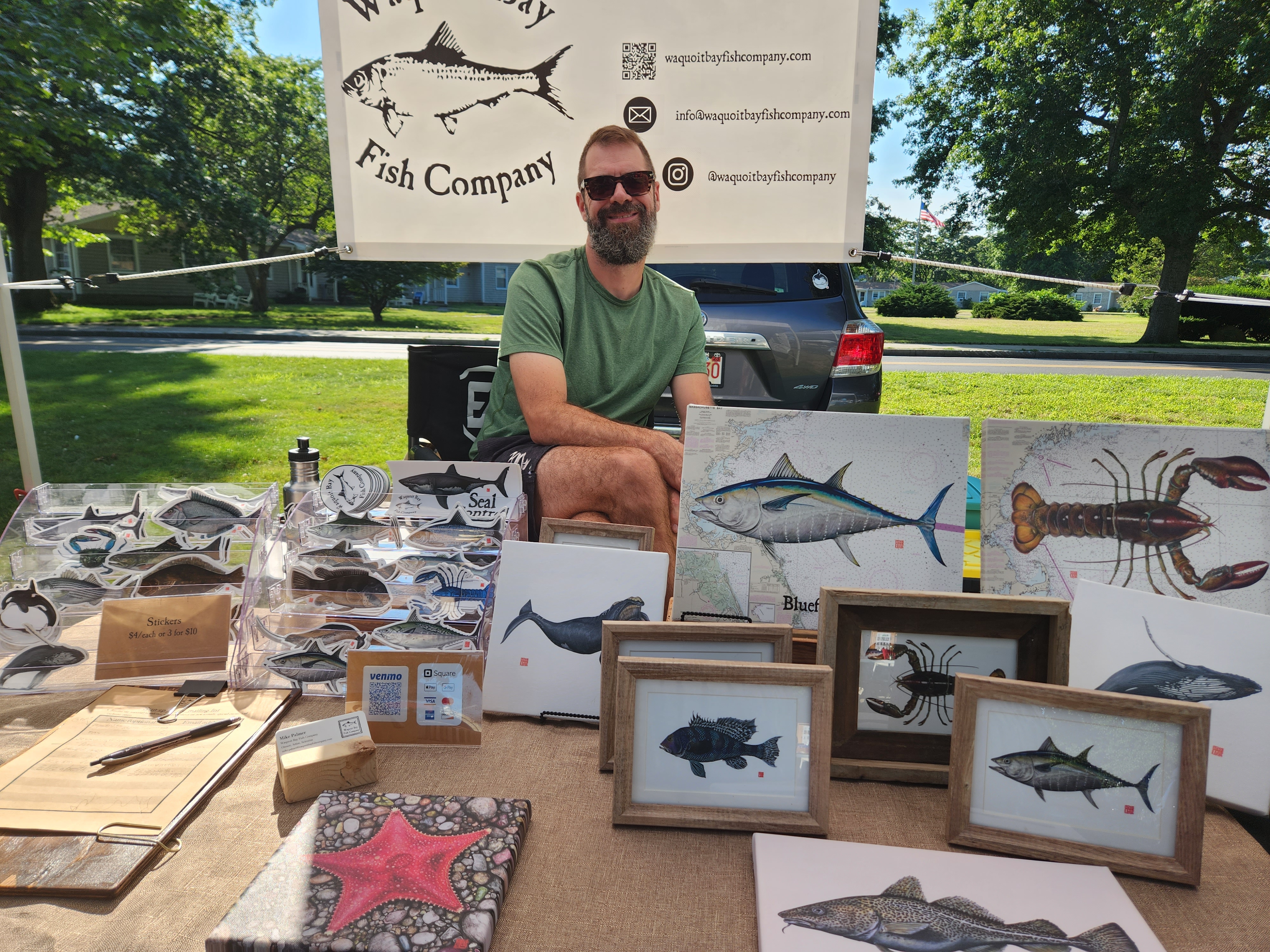
Artist Michael Palmer of Waquoit Bay Fish Company is one of the ArtMarket’s newest artisan vendors. He draws fish, shellfish, whales, and other sea life and sells prints, posters, canvas prints, stickers, greeting cards and other items. He defines his style as “stylized realism,” which, he writes on his website, “balances scientific accuracy and aesthetics.”
Palmer creates his detailed, scientifically authentic artwork in two stages. “I work in black and white first,” he said. “Using graphite pencil, I create large-scale drawings, working on the form of the fish and getting the tones right. Then I make prints of the black-and-white drawings and hand-color them with colored pencil.”
It is a time-consuming process. Palmer spends three or four days on the graphite pencil drawings, and another day hand-coloring the prints. The process depends on the nature of the sea creature. “Lobsters are pretty complex,” he said. “Drawing a black sea bass, which has a lot of scales, can be really complex. But the drawings are a labor of love.”
The scientific accuracy of Palmer’s artwork is due to the fact that he really knows fish.
“I was a fisheries scientist for the National Oceanic and Atmospheric Administration for nearly two decades,” he said, traveling on fishing boats and research vessels from Alaska to the Canadian Maritimes. “I’ve been able to touch, observe, and study fish and other sea life firsthand.”
Palmer’s expertise was population dynamics. He studied cod, haddock, and other groundfish species, using data and computer models to estimate fish populations.
Interested in both science and art in high school, Palmer chose to pursue science in college, and did not draw at all for over 20 years, until he retired from NOAA in 2022. He has enjoyed returning to art and combining his love of science and art.
“I really enjoy it,” he said. “When I was doing the fisheries work, I felt I was producing high quality work, with good quality data, but people didn’t really appreciate the information I shared because it resulted in cutting fishing quotas, affecting fishermen’s livelihoods. Creating art and sharing it with people at art fairs involves a much more positive interaction with people.”
Asked about his favorite fish, Palmer said that cod was near and dear to his heart, despite it “not being a particularly pretty fish, but it was one of the ones I studied when I was a fisheries scientist.” Geographic place and natural heritage are important to Palmer. Much of his work, he writes on his website, “is inspired by the coastal waterways, marshes, and woodlands of the Waquoit Bay region of Cape Cod,” where he and his family live.
For a full list of artisans, musicians, and authors, visit Falmouthartmarket.com.

