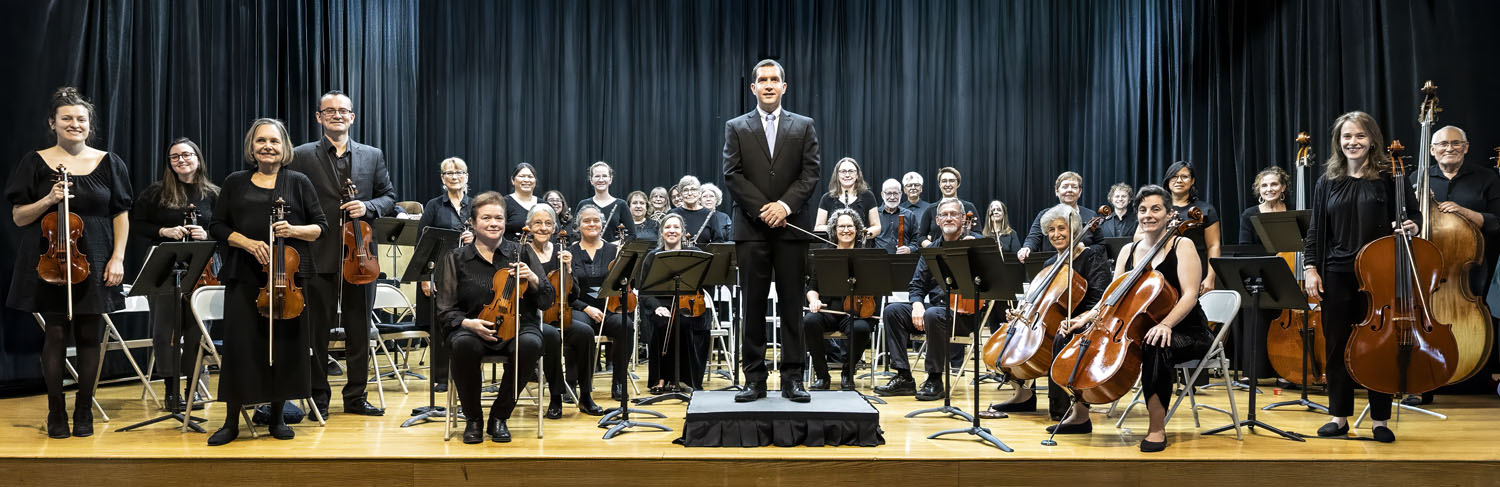
The Falmouth Chamber Players Orchestra, under the direction of conductor Thomas Kociela, will present “Nordic Legends & Mozart’s Masterpiece” on Saturday, March 28, at 3 PM, and Sunday, March 29, at 3 PM, at Morse Pond School Auditorium, 323 Jones Road, in Falmouth.
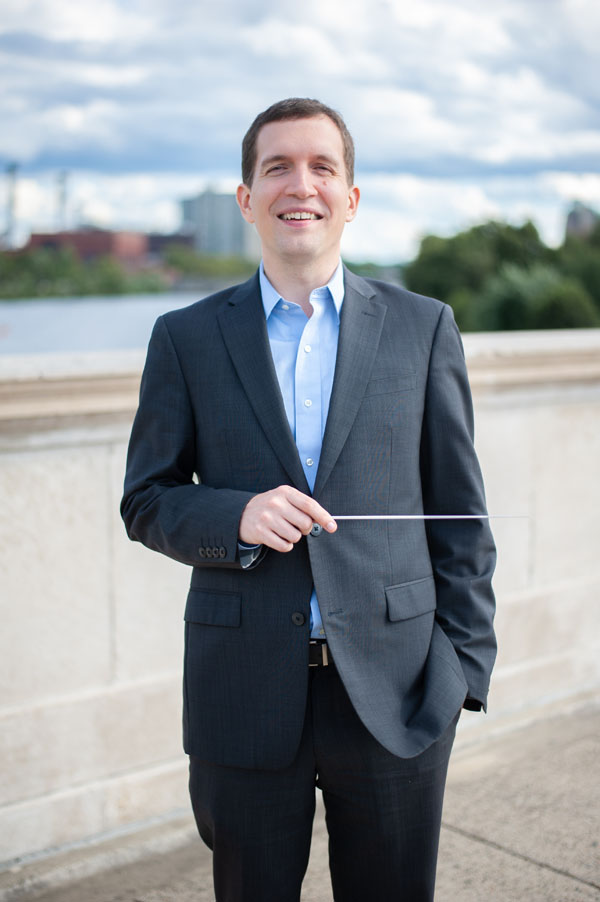
Thomas G. Kociela, FCPO conductor for the 2025-2026 season, is also music director of the Rhode Island College Symphony Orchestra and the Parkway Concert Orchestra (Norwood, MA), as well as the Resident Multi-Camera Video Director at Symphony Hall in Boston. For more information visit: thomaskociela.com
The program includes Sibelius’s Karelia Overture, Grieg’s Symphonic Dances, and Mozart’s Clarinet Concerto, performed by soloist Sangwon Lee.
Jean Sibelius (1865-1957) was commissioned by the Viithat Students’ Association to compose incidental music for an historical pageant celebrating the history and culture of the Karelia region, the source of much of Finland’s mythology and folk music tradition. Karelia sought to retain its own culture at a time when the Russification of Finland aimed to abolish its cultural heritage.
In Karelia Music (1893), one of Sibelius’s early compositions, he incorporates the character of local folk music to portray events in the area’s history. The Overture includes elements of its eight tableaus, including energetic marches, moments of quiet reflection, concluding with an exhilarating march. As one reviewer wrote, the music has “an appealing dignified feel, as of an army marching joyfully from the fields of victory, accompanied by birdsong and sunlight.”
Like Sibelius, Edvard Grieg (1843-1907) is known for his nationalistic music, music which bolstered the national identity of his country, Norway. Grieg based his Symphonic Dances on folk tunes collected by Ludvig M. Lindemann (1812-1887) and composed them for piano four hands, a popular genre at the time. They were orchestrated by Hans Sitt.
The first and second dances are hallings: vigorous, acrobatic Norwegian mountain dances that begin quietly and gradually build to a hypnotic intensity. The first is quite spirited, the second more relaxed, with a gentle theme provided by oboe, harp, and pizzicato strings. The third dance is a lively spring dance melody. The finale draws from an old mountain ballad, a wedding song, and a dramatic heroic march.
“The Symphonic Dances are truly delightful to perform,” said Melanie Hayn, FCPO president and principal oboe, “with melodies passed between woodwind players and with the strings. The oboe part in this work is particularly fun—I feel as if I’m dancing among the sections of the orchestra during some passages.”
Wolfgang Amadeus Mozart (1756-1791) composed his Clarinet Concerto for virtuoso clarinetist Anton Stadler to be performed on basset clarinet, completing it just a few months before his death. The basset clarinet, co-invented by Stadler, could play a few notes lower than the standard clarinet. After Mozart’s death, the low notes were transposed to be played on the standard clarinet, and the original basset clarinet score was lost.
The concerto is considered one of Mozart’s greatest works. It is a piece of great emotional depth, conveying peace, simplicity, and contentment, making good use of the full range of the clarinet and the virtuosity of the player. The second movement Adagio, in particular, has been described as “achingly beautiful,” lyrical, and serene, with a melancholic thoughtfulness, while the third movement offers a cheerful and delightful rondo.
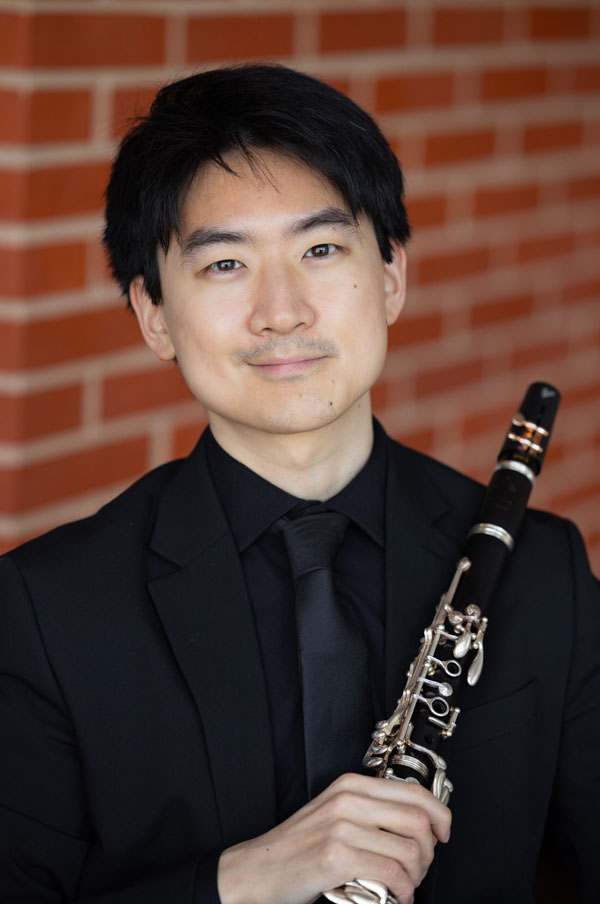
Soloist Sangwon Lee notes that the concerto was written at a difficult point in Mozart’s life. He was beset by poor health and growing debt. “The music, however, is uplifting,” Lee said, with hints of somber tone.”
“Like many clarinetists,” Lee said, “I have a complicated relationship with the concerto. It’s a piece we have been exposed to as young, inexperienced players. It’s a piece that has been on virtually every audition we have taken. It’s the piece in the clarinet repertoire. There are times I cherished practicing it. There are times I loathed practicing it. But we always come back to it, a lot of times not by choice, and it ‘hits different’ as time goes on, and we discover something new every time. We love it!”
Sangwon Lee joined the Hartford Symphony as Principal Clarinet in 2023. He has performed with orchestras all over New England, appearing as guest principal clarinetist in the Boston Pops Orchestra, New Bedford Symphony, Dartmouth Symphony, and others. As a chamber musician, Sangwon has shared the stage with the late Peter Serkin—performing the Beethoven and the Mozart Quintets for Piano with Winds in multiple performances in 2018.
In addition to performing, Sangwon is passionate about music education. He has coached woodwind sectionals at Yale University, Boston Youth Symphony Orchestra, Boston Latin School, and elsewhere. He taught clarinet and saxophone at the summer Bard Music Camp and at Bard College at Simon’s Rock in Great Barrington, MA. For more information, visit Sangwon Lee.
A donation at the door of $20 for adults and $5 for young professionals is suggested, with free admission for students. Tickets are available only at the door. For more information, visit falmouthchamberplayers.org.
The FCPO is funded in part by the Arts Foundation of Cape Cod, the Falmouth Cultural Council, the Mass Cultural Council, the Falmouth Fund of the Cape Cod Foundation, Cape Cod Melody Tent, and the Woods Hole Foundation.
 Notes on The Arts